Why can hummingbirds hover and fly backward?
Hummingbirds do not hover simply because their wings beat quickly. The crucial trick is how the wings rotate and sweep through the air, producing useful aerodynamic force through both halves of the stroke.
What matters most
Wing rotation lets the upstroke contribute useful lift as well as the downstroke.
The bird can redirect aerodynamic force almost instantly.
Hovering requires enormous metabolic output.
Hummingbirds also eat insects and other arthropods for protein and nutrients.
One wingbeat, four control points
Wing creates strong lift and thrust.
Wing rapidly rotates.
Rotated wing continues producing useful lift.
Body and tail fine-tune hover, sideways motion, or backward movement.
Why hovering is different
Many birds generate most of their useful lift on the downstroke. Hummingbirds use a much more symmetrical stroke, with the wing rotating at the ends of the sweep. That allows force to remain useful across more of the cycle and makes sustained hovering possible.
How backward flight works
A hummingbird does not need to turn around to move backward. By changing the orientation and timing of the wing forces while adjusting its body and tail, it can produce a net force that moves the body away from the flower while maintaining control.
The energy bill
Hovering is expensive. Hummingbirds have extremely high metabolic rates during flight and rely heavily on readily available carbohydrate energy. Nectar supplies that rapid fuel, while insects and other small arthropods supply protein, fat, and micronutrients.
Why torpor matters
Some hummingbirds dramatically reduce metabolism and body temperature at night through torpor. It is a powerful energy-saving strategy for an animal that spends the day operating close to the limits of vertebrate metabolism.
Compare the moving parts
| Flight feature | What it enables | Tradeoff |
|---|---|---|
| Rotating wing | Lift during more of the stroke | Complex, high-speed control |
| Hovering | Stationary feeding at flowers | Very high energy cost |
| Backward flight | Exit flower without turning | Requires precise force redirection |
| Small body | Rapid acceleration/braking | Greater heat and energy demands |
Why the flower interaction matters
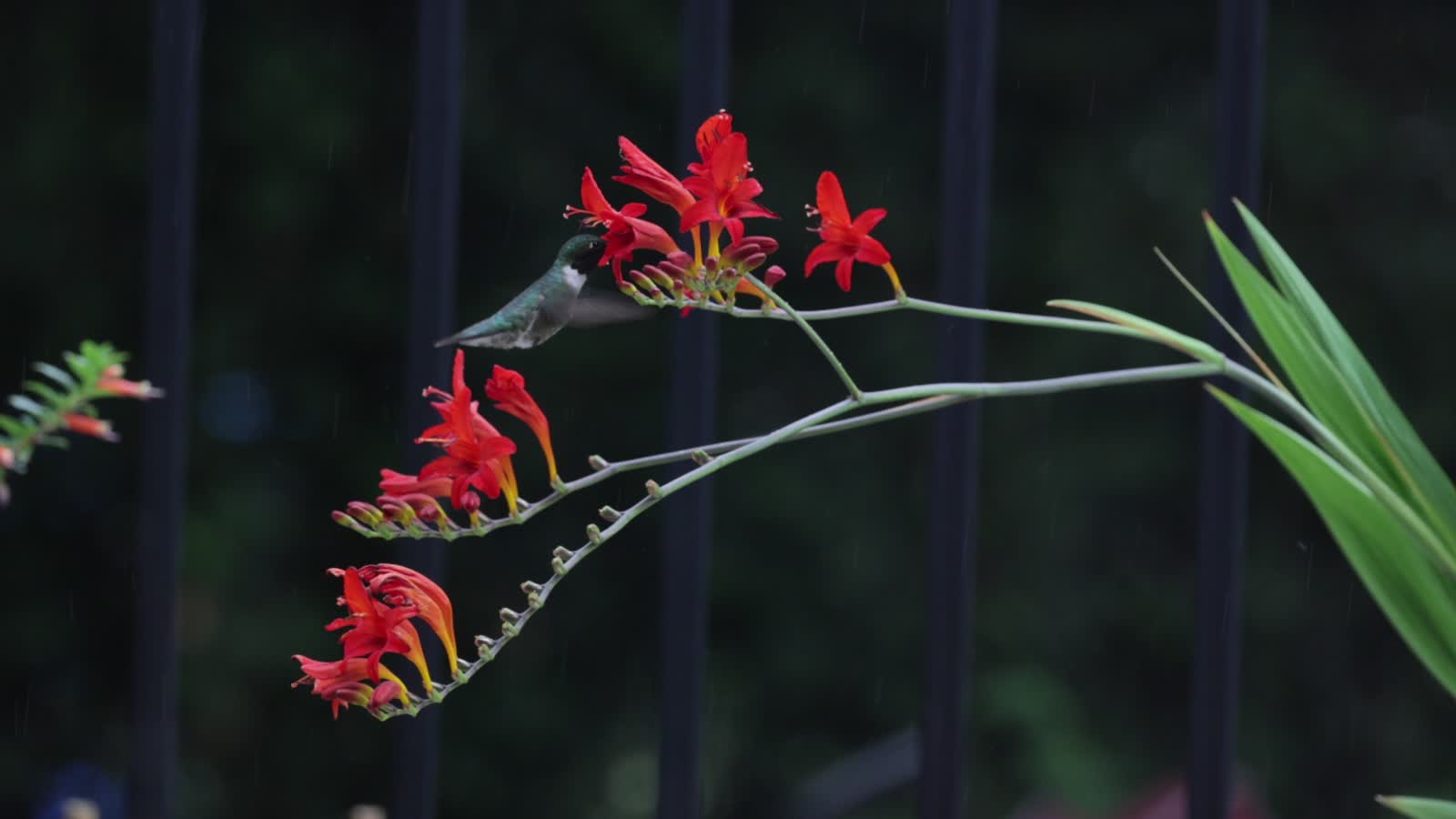
A hovering hummingbird can hold its bill in a flower while the wings continue generating lift. When feeding is finished, the bird can reverse its net force and back away without rotating its whole body. That tiny maneuver captures the value of its unusual wing mechanics.
Frequently asked questions
Can other birds hover?
Some can hover briefly, but hummingbirds are uniquely specialized for sustained hovering.
Do hummingbirds only eat nectar?
No. They also consume insects and other small arthropods.
Is backward flight just drifting?
No. It is controlled powered flight.
Do all hummingbirds beat their wings at the same rate?
No. Wingbeat rate varies with species, body size, and activity.
Sources
IN60seconds uses primary or authoritative sources whenever possible. Changing figures, rules, prices, and product terms should be rechecked when this page is materially updated.