Is the 5-second rule real?
Not really. A Rutgers study found bacteria can jump onto dropped food in under a second. Wet foods and smooth floors pick up the most, and longer contact means more germs.
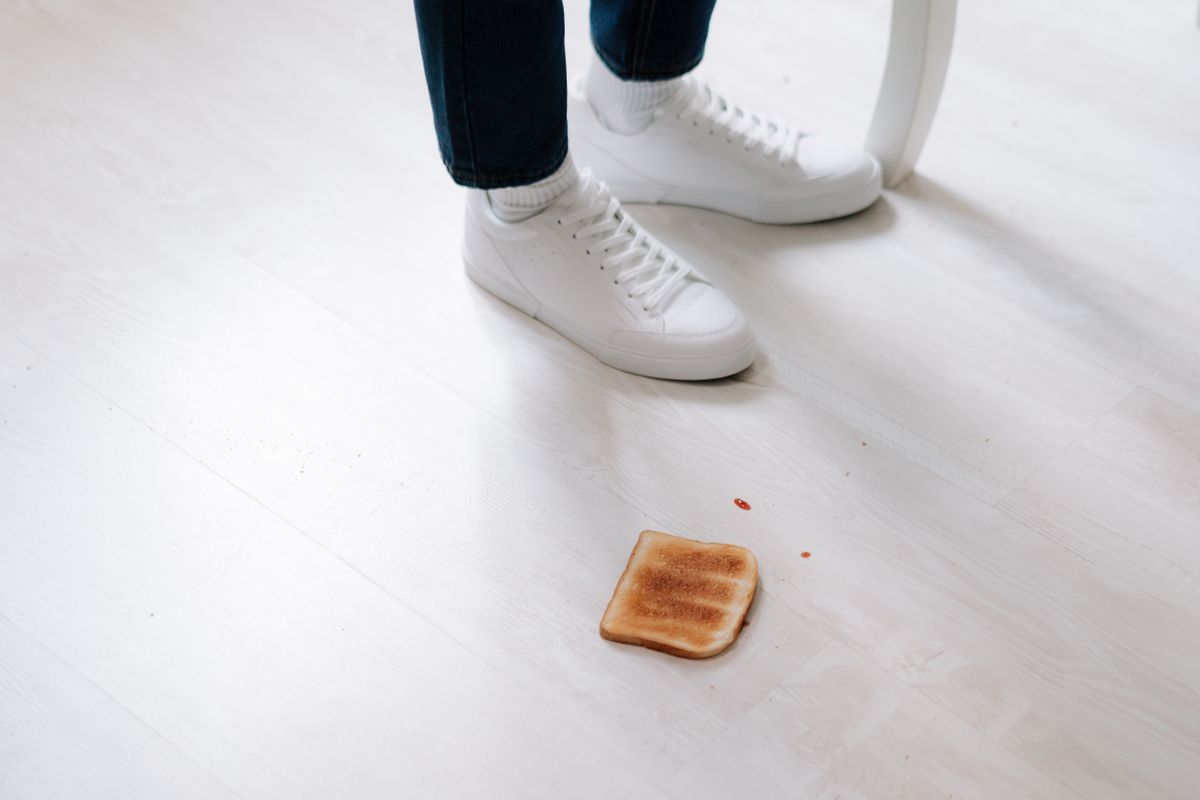
Quick Answer
No. In a 2016 study published in Applied and Environmental Microbiology, Rutgers University food scientist Donald Schaffner and graduate student Robyn Miranda dropped four foods, watermelon, plain bread, buttered bread and gummy candy, onto four surfaces coated with a harmless bacterium: stainless steel, ceramic tile, wood and carpet. They left the food there for less than one second, 5 seconds, 30 seconds or 5 minutes, and repeated each combination 20 times, for 2,560 measurements in all. Bacteria transferred in under a second. Longer contact did mean more transfer, but moisture mattered most: watermelon picked up the most bacteria and gummy candy the least. Surprisingly, carpet transferred far fewer bacteria than tile or stainless steel. As Schaffner put it, bacteria can contaminate instantaneously.
By the Numbers
Key Facts
- Short answer
- No. Bacteria can reach dropped food in under a second
- The study
- Rutgers University, 2016: 2,560 measurements
- What matters most
- Moisture. Wet foods pick up the most bacteria
- Surprise finding
- Carpet transferred fewer bacteria than tile or stainless steel
What picked up the most bacteria
| Most | Least | |
|---|---|---|
| Food | Watermelon (wettest) | Gummy candy (driest) |
| Surface | Tile and stainless steel | Carpet |
| Contact time | 5 minutes | Under 1 second |
Bacteria transferred even at the shortest contact time.
How they tested it
The researchers coated each surface with Enterobacter aerogenes, a harmless bacterium, then dropped food on it for four different lengths of time. Every combination of food, surface and time was repeated 20 times.
Why wet food is riskier
Moisture carried the most bacteria. “Bacteria don’t have legs, they move with the moisture,” Schaffner said, so juicy watermelon picked up far more than dry gummy candy.
The carpet surprise
Carpet transferred the fewest bacteria. Tile and stainless steel transferred much more, and wood was more variable. The researchers say the texture of both the surface and the food plays a role.
Myth vs. Fact
MythFood is safe if you grab it within 5 seconds.
FactBacteria can transfer in under a second.
MythCarpet is the worst place to drop food.
FactIn the study, carpet transferred fewer bacteria than tile or stainless steel.
The Bottom Line
The 5-second rule doesn’t hold up: bacteria can reach dropped food in less than a second, and wet food on a smooth floor picks up the most. That doesn’t mean every dropped snack will make you sick, but five seconds won’t keep it clean.