Why do cranberries float?
Because every cranberry has air pockets inside. Four tiny chambers make the berries buoyant, which is why growers flood bogs to harvest most of the crop and why a fresh cranberry bounces.
Quick Answer
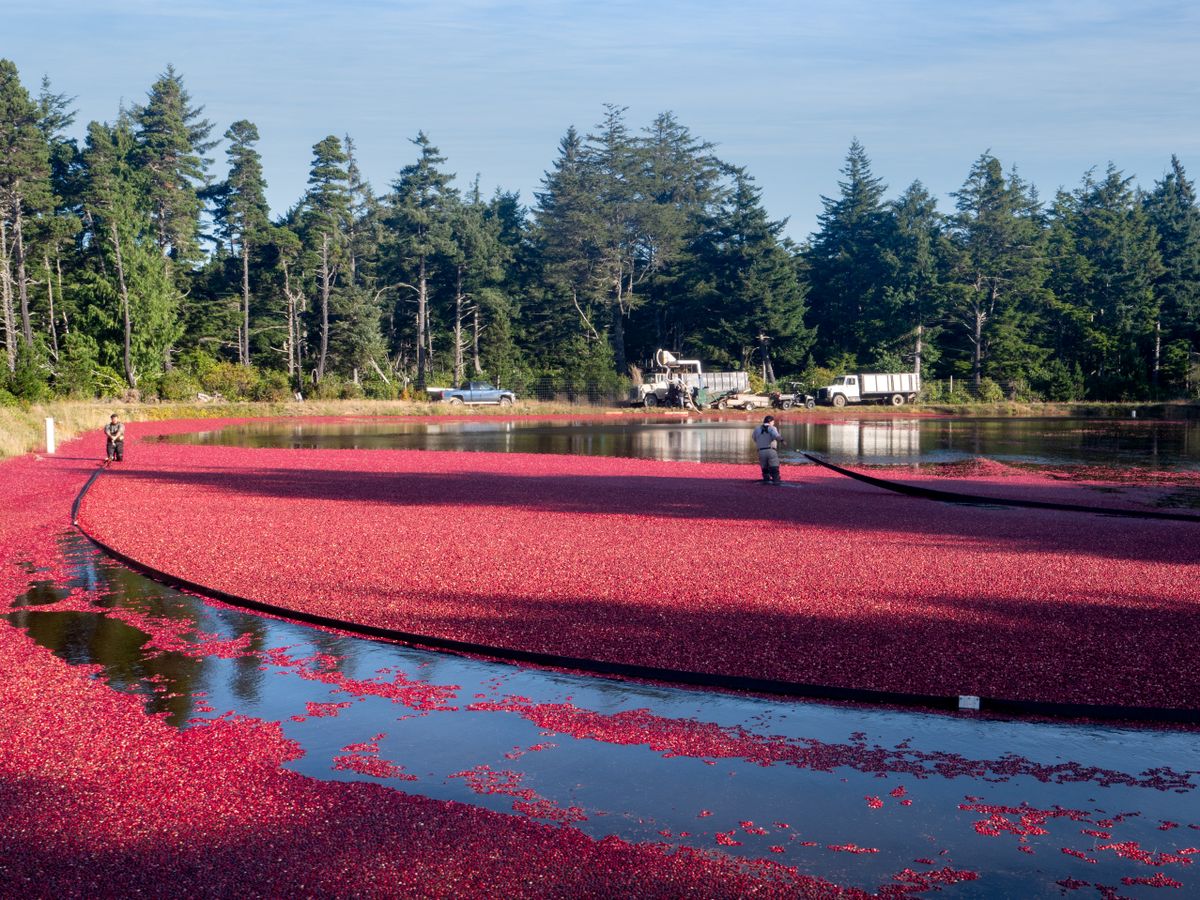
Cranberries float because each berry has four air pockets inside. The trapped air makes the berry less dense than water, so it bobs to the surface. Growers take advantage of this at harvest. For a wet harvest, a bog is flooded with up to 18 inches of water, usually the night before, and machines churn the water to knock the berries off the vines. The floating fruit is then corralled with booms and lifted or pumped into trucks. About 90 percent of cranberries are harvested this way and go into juice, dried cranberries and sauce. The rest are dry picked and sold as fresh fruit. The same air pockets make fresh raw cranberries bounce when you drop them on a hard surface, a handy sign of freshness. Cranberries don’t actually grow in water: they grow on low, trailing vines in beds called bogs.
By the Numbers
Key Facts
- Why they float
- Four air pockets inside each berry
- Wet harvest
- The bog is flooded with up to 18 inches of water, usually the night before
- Share harvested wet
- About 90%
- The bounce test
- Fresh raw cranberries bounce when dropped
How a wet harvest works
- Flood the bog
Growers flood the bog with up to 18 inches of water, usually the night before.
- Churn the water
Water reels, often called “egg beaters,” loosen the berries from the vines.
- Corral the berries
The floating berries are gathered with booms.
- Lift and haul
The berries are lifted or pumped into trucks and taken to receiving stations to be cleaned and processed.
Air inside every berry
Each cranberry contains four air pockets. Those pockets provide enough buoyancy to lift the lightweight berry to the surface, and they’re why a fresh raw cranberry bounces on a hard surface. The air pockets are also thought to help wild cranberries spread, because floating berries can carry their seeds along streams and rivers.
Wet and dry harvests
About 90 percent of cranberries are harvested wet. After the bog is flooded, water reels loosen the berries, which float up, and workers corral them with booms. That fruit is used for juice, dried cranberries and sauce. About 10 percent of the Massachusetts crop is picked dry, combed off the vines without flooding, and sold as fresh fruit in bags.
Do cranberries grow in water?
No. Cranberries grow on low vines in beds called bogs. The bogs are flooded for a wet harvest, which is why harvest photos show a sea of floating red berries, but the berries grow on the vines.
Myth vs. Fact
MythCranberries grow underwater.
FactThey grow on vines in bogs. The bogs are flooded for a wet harvest, but the berries grow on the vines.
MythAll cranberries are harvested wet.
FactAbout 90 percent are, and the rest are dry picked and sold as fresh fruit.
The Bottom Line
Cranberries float because each berry has four air pockets, which is why growers flood bogs to harvest most of the crop. The same air makes a fresh cranberry bounce.