Where did Halloween come from?
Halloween began about 2,000 years ago with the Celtic festival of Samhain, took its name from a Christian holy day, and crossed the Atlantic with Irish and Scottish immigrants.
Quick Answer
Halloween’s roots go back about 2,000 years to Samhain, a Celtic festival marking the end of summer and the start of the dark half of the year, when people lit bonfires and wore costumes to ward off roaming spirits. In the 8th century, Pope Gregory III designated November 1 to honor all saints, and the evening before became All Hallows’ Eve, later shortened to Halloween. Irish and Scottish immigrants brought the holiday’s customs to North America in the 19th century, including carved lanterns: turnips back home, pumpkins in America. The phrase “trick or treat” first appeared in print in Alberta, Canada, in 1927. Today it’s big business: the National Retail Federation expects Americans to spend a record $13.5 billion on Halloween in 2026.
By the Numbers
Key Facts
- Roots
- Samhain, a Celtic festival from about 2,000 years ago
- The name
- All Hallows’ Eve, the night before All Saints’ Day on November 1
- First jack-o’-lanterns
- Carved turnips in Ireland and Scotland; pumpkins in America
- “Trick or treat”
- First printed in Alberta, Canada, in 1927
Timeline
- ~2,000 years ago
Celts celebrate Samhain, the start of the dark half of the year, with bonfires and costumes.
- 8th century
Pope Gregory III designates November 1 to honor all saints; the evening before becomes All Hallows’ Eve.
- 1800s
Irish and Scottish immigrants bring Halloween customs to North America and swap turnip lanterns for pumpkins.
- 1927
“Trick or treat” first appears in print, in a newspaper in Blackie, Alberta.
- 2026
Americans are forecast to spend a record $13.5 billion on Halloween.
A festival at the edge of winter
For the Celts, Samhain marked the end of the harvest and the start of winter. People believed the boundary between the living and the dead blurred that night, so they lit bonfires and wore costumes to ward off wandering spirits.
How a holy day renamed it
In the 8th century, Pope Gregory III made November 1 a day to honor all saints. All Saints’ Day soon absorbed some Samhain traditions, and the evening before, All Hallows’ Eve, became Halloween.
Stingy Jack and the first lanterns
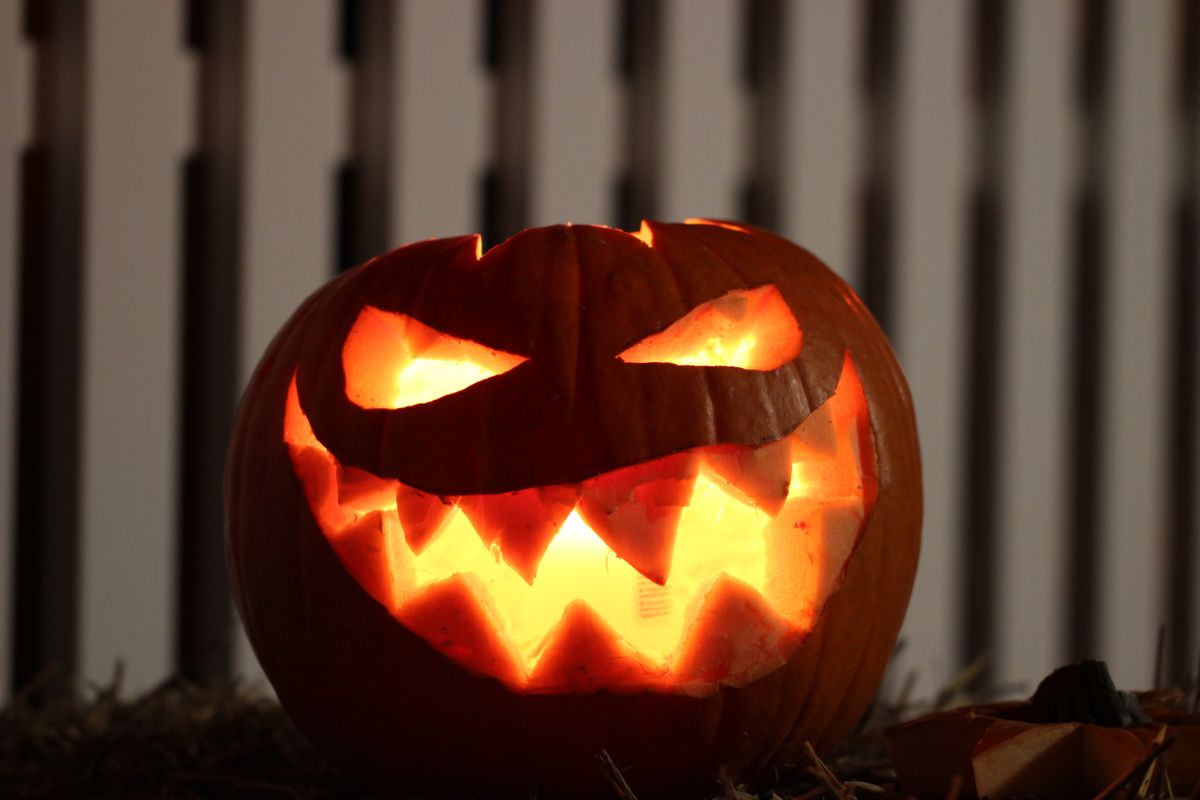
Irish legend tells of Stingy Jack, a trickster doomed to roam the earth with only a hollowed turnip to light his way. People in Ireland and Scotland carved faces into turnips to frighten off wandering spirits; in America, immigrants found pumpkins made even better lanterns.
Myth vs. Fact
MythHalloween is an American invention.
FactIts roots are Celtic and Irish. America added the pumpkins and turned it into a huge consumer holiday.
MythJack-o’-lanterns were always pumpkins.
FactIn Ireland and Scotland people carved turnips. Immigrants switched to pumpkins, which are native to the Americas.
The Bottom Line
Halloween blends a 2,000-year-old Celtic festival with a Christian holy day and Irish immigrant traditions. The costumes and lanterns are old; the pumpkins and the candy haul are American additions.