What happens when lightning hits an airplane?
Usually not much. The plane’s skin carries the current around the cabin and back out into the air. The average airliner is struck about once a year, and fuel-system protections were tightened after a 1963 crash.
Quick Answer
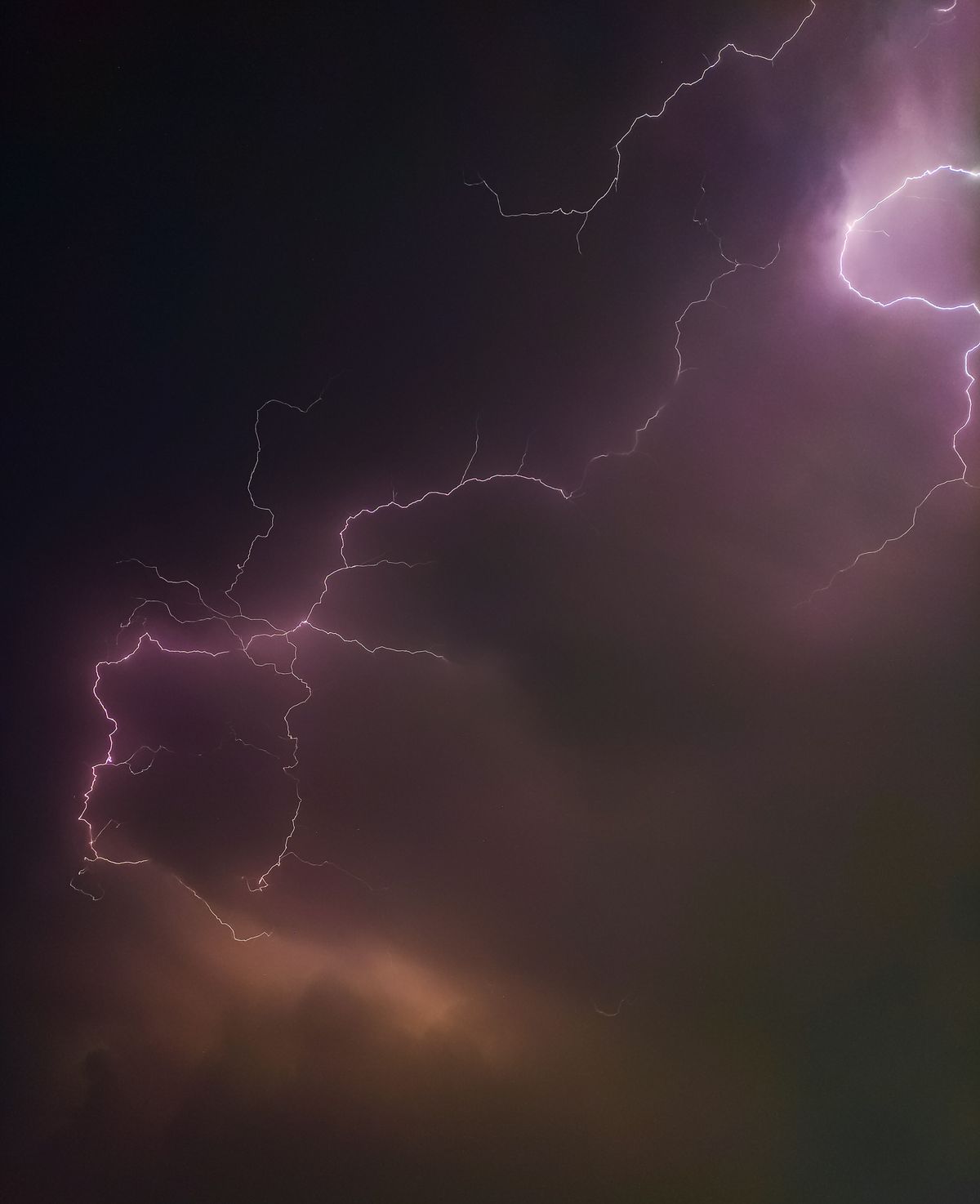
An airliner is struck by lightning about once a year on average, according to a company that makes lightning protection for aircraft. Passengers may see a bright flash and hear a loud bang, but the electricity flows along the plane’s outer skin and leaves through another point rather than passing through the cabin. A metal skin conducts well, and on planes built from composites, manufacturers embed a thin layer of copper or aluminum mesh in the surface to do the same job. Aircraft can be struck by lightning at flight altitudes of about 5,000 to 15,000 feet, and some strikes are set off by the plane itself flying through charged air. The most serious risk is fuel. In 1963, lightning ignited fuel vapors in a reserve tank on Pan Am Flight 214 near Elkton, Maryland, and all 81 people aboard died. Fuel-system lightning protection has been tightened since, and planes are typically inspected after a strike.
By the Numbers
Key Facts
- How often
- About once a year for the average airliner
- Why passengers are safe
- The metal skin carries the current around the cabin
- The biggest risk
- Lightning igniting fuel vapors, which protection rules now address
- Last U.S. airliner crash blamed on lightning
- Pan Am Flight 214, in 1963
Where the current goes
- A strike hits an extremity
Lightning usually attaches at a point like the nose or a wingtip.
- The current spreads over the skin
The aircraft’s conductive outer layer carries it along the fuselage and wings.
- The cabin stays shielded
Like a cage, the skin keeps the current on the outside.
- It leaves at another point
The current exits from another extremity, such as the tail.
A cage in the sky
Aluminum is a very good conductor, so when lightning hits a metal airplane, the current flows over the skin and off into the air. That keeps it out of the cabin. Static wicks, the small rods on the trailing edges of the wings and tail, bleed off the static electricity that builds up in flight.
Composite planes get a mesh
Many modern airliners have fuselages made of carbon-fiber composites, which don’t conduct as well and can be damaged by lightning without protection. Manufacturers embed a thin metal mesh, typically copper or aluminum, in the surface to carry the current. NASA researchers flew an instrumented F-106 jet through thunderstorms for years to study how lightning behaves; it absorbed more than 700 direct strikes.
Why fuel is the focus
On December 8, 1963, a Boeing 707 flying as Pan Am Flight 214 was in a holding pattern near Elkton, Maryland, when lightning ignited fuel vapors in a reserve tank. The left wingtip separated and all 81 aboard died. The Civil Aeronautics Board released its report in March 1965, and the crash spurred better lightning protection for fuel systems.
Myth vs. Fact
MythLightning can easily bring down a modern airliner.
FactAirliners are designed to handle strikes. The current follows the skin, and fuel-system protections are a key part of the design.
MythThe electricity travels through the passengers.
FactIt stays on the plane’s outer skin and exits at another point.
The Bottom Line
Lightning hits the average airliner about once a year. The plane’s skin carries the current around the cabin and out again, and protections added after a 1963 crash address the biggest risk, fuel.