Why is the Statue of Liberty green?
Because its copper skin oxidized. Dedicated in 1886 as shiny, penny-colored copper, the statue slowly weathered into a protective green layer called a patina, a change that took roughly two to three decades.
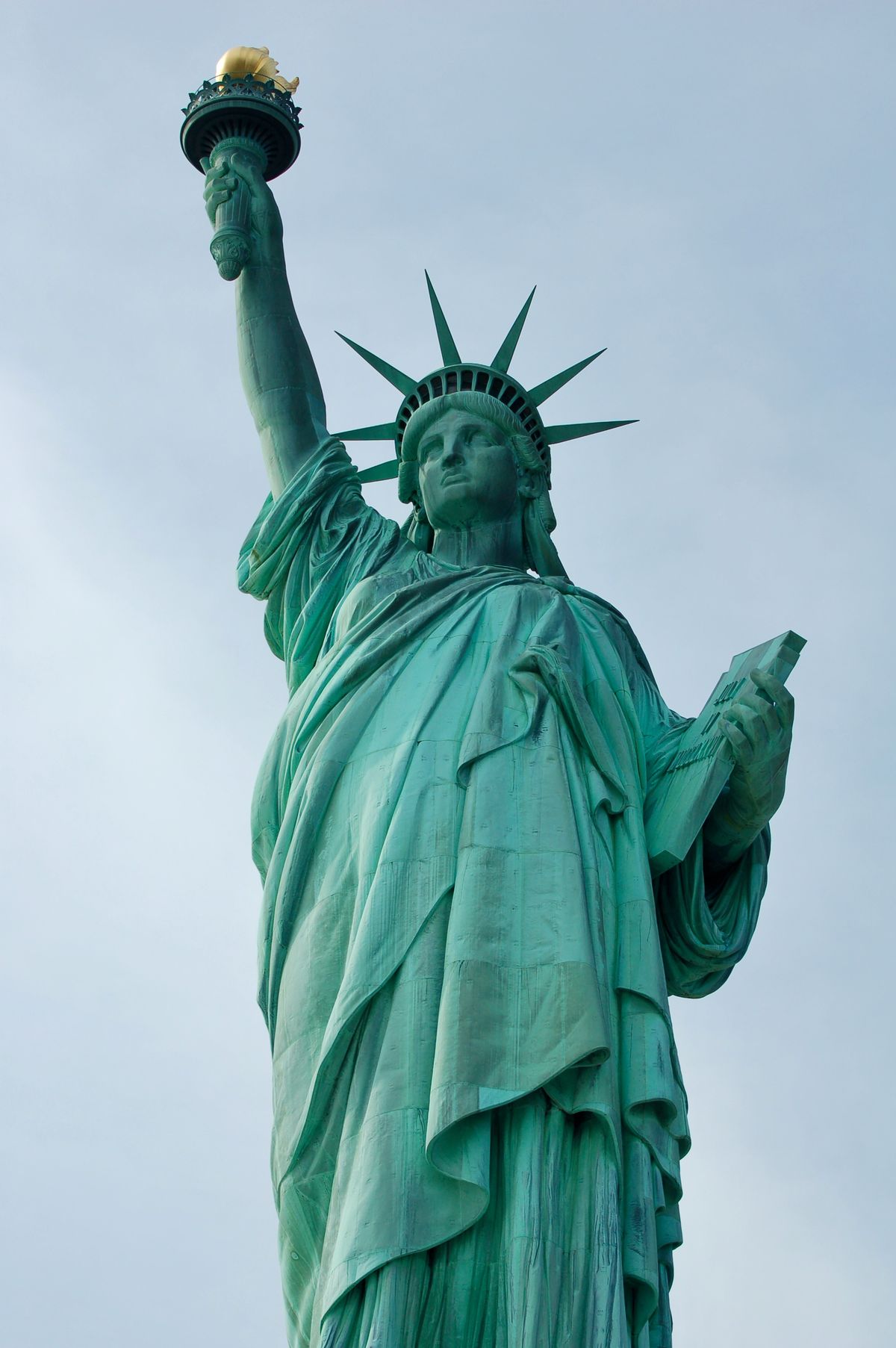
Quick Answer
The Statue of Liberty is green because its copper skin reacted with air, water and pollutants and slowly formed a green coating called a patina. The statue was dedicated on October 28, 1886, and it gleamed like a new penny; its copper skin is about 3/32 of an inch (2.4 mm) thick. Within about 15 years it had darkened to a dull brown, green began to show around 1903, and the National Park Service believes the full change took about 25 to 30 years. Copper first forms reddish and dark oxides. Sulfur compounds from the air and water then turn the surface into a blue-green mineral called brochantite, which makes up most of the statue’s patina. The patina isn’t damage; it protects the copper underneath. In 1906, the Army Corps of Engineers studied it and concluded it protected the skin, so only the inside of the statue was painted. October 28, 2026, is the statue’s 140th anniversary.
By the Numbers
Key Facts
- The cause
- The copper skin oxidizes in air, water and pollution, forming a green patina
- Original color
- Shiny, reddish-brown copper, like a new penny
- How long it took
- About 20 to 30 years, depending on the source
- Is it damage?
- No. The patina protects the copper underneath
Timeline
- Oct. 28, 1886
The statue is dedicated, gleaming like a new penny.
- By about 1901
After roughly 15 years in New York Harbor, the copper has dulled to a darker brown.
- About 1903
People begin to notice a green patina forming.
- 1906
Repairs and painting are authorized, but the Army Corps of Engineers finds the patina protects the copper, and only the inside is painted.
From penny to green
The statue’s skin is made of copper sheets about as thick as two pennies, and when it was unveiled it was the shiny reddish-brown of a new penny. Within its first 15 years in New York Harbor it darkened to a dull brown, and by about 1903 people were noticing green. The National Park Service believes the change from bronze-colored to green took about 25 to 30 years, while the American Chemical Society describes the patina as about 20 years in the making. Either way, it took decades.
The chemistry, in stages
Copper first reacts with oxygen in the air, forming reddish and then darker copper oxides, which is why the statue dulled before it turned green. Sulfur compounds from the air, along with water, then convert the surface into blue-green brochantite, a basic copper sulfate. Analyses of samples from the statue found its patina is made up mostly of brochantite, with antlerite, a related mineral, in more exposed spots. Chloride from sea spray can add olive-green atacamite.
Why it wasn’t painted over
By 1906, some people wanted the statue restored to its original color. Congress authorized repairs and painting, but the Army Corps of Engineers examined the patina for any harm and concluded that it protected the metal, “softened the outlines of the Statue, and made it beautiful.” Only the inside of the statue was painted. A copper-industry representative said that removing the patina would be “vandalism for which there would be no excuse.”
Myth vs. Fact
MythThe Statue of Liberty was always green.
FactIt was shiny copper when it was dedicated in 1886, and the green developed over the next two to three decades.
MythThe green is corrosion that’s eating the statue away.
FactThe patina protects the copper underneath. In 1906 the Army Corps of Engineers concluded it protected the skin.
The Bottom Line
The Statue of Liberty is green because its copper skin oxidized over decades into a protective patina. It was shiny copper, like a new penny, when it was dedicated on October 28, 1886.
Sources & Further Reading
- National Park Service — Preserving a Symbol
- National Park Service — Frequently Asked Questions About the Statue of Liberty
- HISTORY — The Statue of Liberty Wasn’t Always Green
- American Chemical Society — Statue of Liberty: A patina 20 years in the making (Reactions infographic)
- Copper Development Association — Statue of Liberty: Reclothing the First Lady of Metals
- Powder Diffraction — An X-Ray Diffraction Analysis of the Patina of the Statue of Liberty