Why isn’t Pluto a planet anymore?
In 2006, astronomers defined “planet” for the first time. Pluto orbits the Sun and is round, but it hasn’t cleared its orbital neighborhood, so it’s a dwarf planet.
Quick Answer
Pluto was hailed as the ninth planet when Clyde Tombaugh discovered it on February 18, 1930. But astronomers kept finding icy worlds beyond Neptune, and in 2005 Mike Brown’s team found Eris, about 27% more massive than Pluto. That forced a question no one had formally answered: what is a planet? On August 24, 2006, the International Astronomical Union decided a planet must orbit the Sun, be massive enough for its gravity to pull it into a nearly round shape, and have cleared the neighborhood around its orbit. Pluto passes the first two tests but not the third, because it shares its region of space with many other objects. So Pluto became a dwarf planet, along with Eris and Ceres. It’s still a fascinating world, as NASA’s New Horizons showed when it flew past on July 14, 2015.
By the Numbers
Key Facts
- Discovered
- February 18, 1930, by Clyde Tombaugh
- Reclassified
- August 24, 2006, by the International Astronomical Union
- The test it fails
- It hasn’t cleared its orbital neighborhood
- Size
- 2,377 km across, smaller than Earth’s Moon
Timeline
- 1930
Clyde Tombaugh discovers Pluto on February 18.
- 2005
Mike Brown’s team discovers Eris, about 27% more massive than Pluto.
- 2006
On August 24, the IAU defines “planet,” and Pluto becomes a dwarf planet.
- 2015
NASA’s New Horizons flies past Pluto on July 14.
- 2178
Pluto completes its first full orbit since being discovered.
The three tests for a planet (IAU, 2006)
| Test | Earth | Pluto |
|---|---|---|
| Orbits the Sun | Yes | Yes |
| Pulled into a nearly round shape by its own gravity | Yes | Yes |
| Has cleared its orbital neighborhood | Yes | No |
A crowded neighborhood
Pluto orbits in a region beyond Neptune filled with icy bodies, some of which cross its path. Under the 2006 definition, a planet must dominate its orbit; Pluto doesn’t.
The discovery that forced a decision
Eris, found in 2005, turned out to be about 27% more massive than Pluto. If Pluto was a planet, Eris had a strong claim too, and more such objects were likely out there. The IAU responded by defining the word “planet” for the first time.
Still a remarkable world
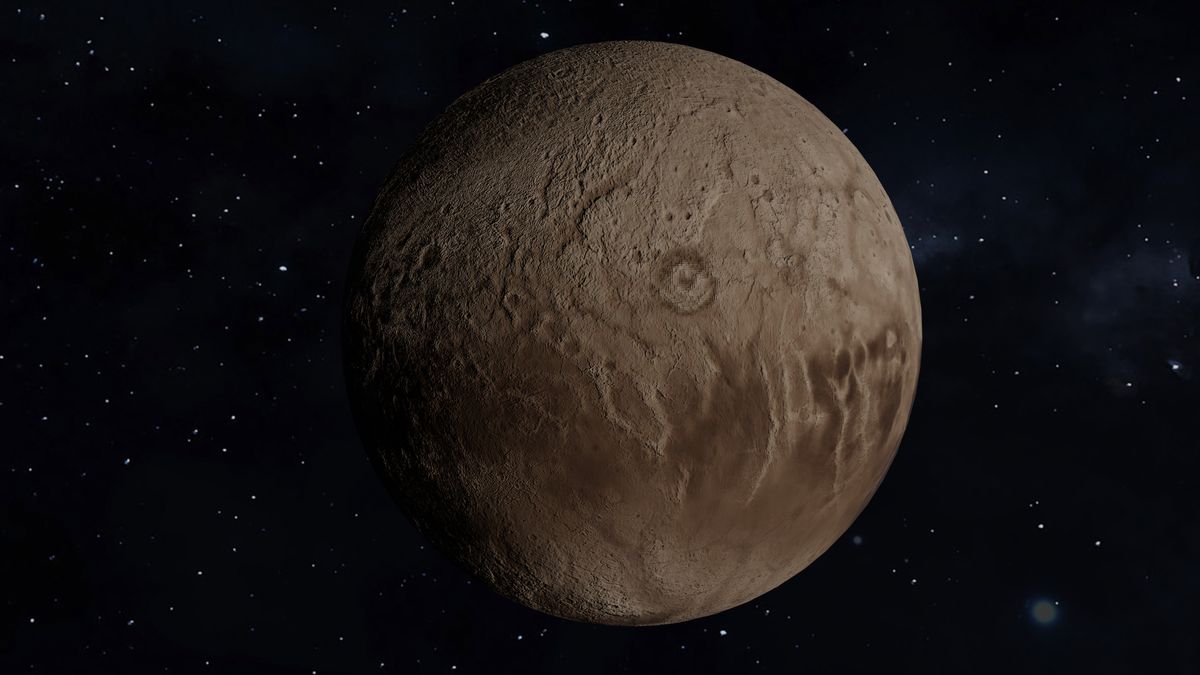
When New Horizons flew past on July 14, 2015, it revealed a complex world, including a huge heart-shaped region nicknamed Tombaugh Regio. Pluto is 2,377 km across and takes 248 years to circle the Sun.
Myth vs. Fact
MythPluto was demoted for being too small.
FactSize alone wasn’t the test. Pluto is round and orbits the Sun, but it hasn’t cleared its orbital neighborhood.
MythPluto is the only dwarf planet.
FactEris and Ceres were classified as dwarf planets at the same time, in 2006.
The Bottom Line
Pluto lost its planet status in 2006 not because it’s small, but because it hasn’t cleared its orbital neighborhood. It’s now a dwarf planet, and still one of the most fascinating worlds we’ve ever visited.