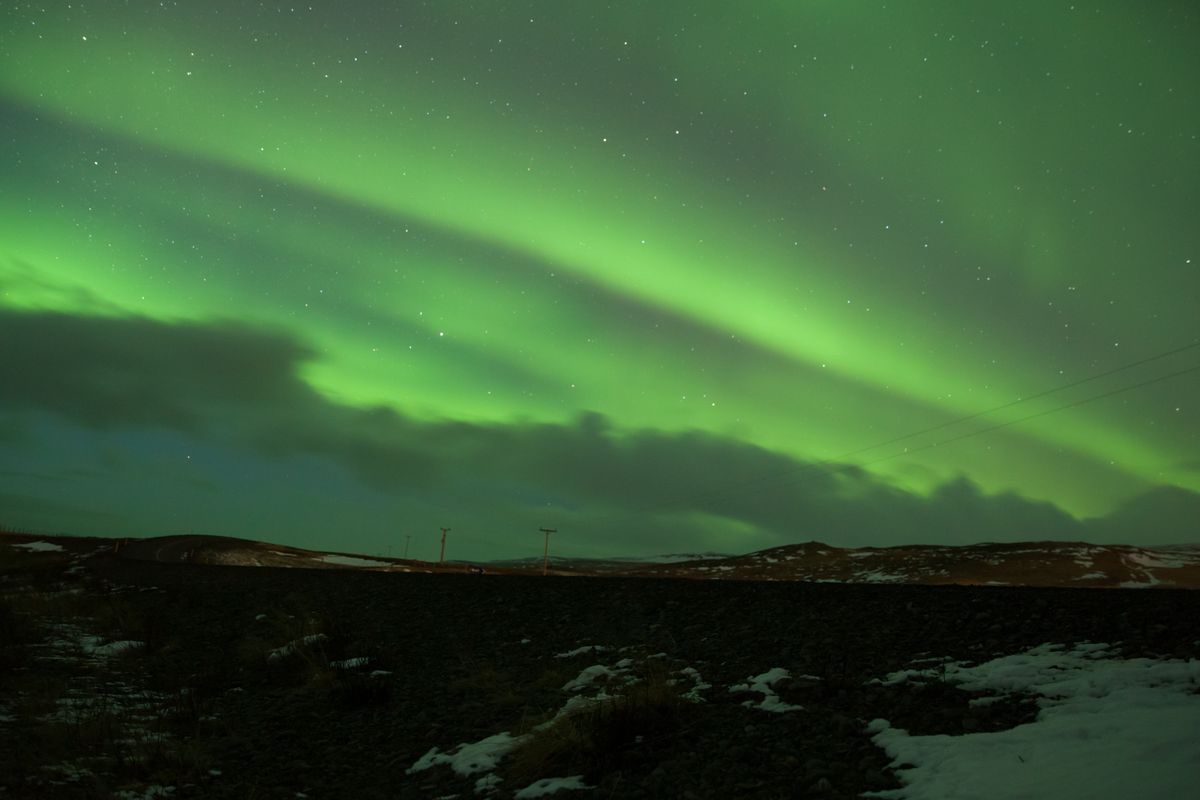
Why have the northern lights been showing up so far south?
The Sun hit the peak of its roughly 11-year activity cycle in late 2024. Powerful solar storms push auroras toward the equator, and big ones can still strike as activity declines.
Quick Answer
Auroras happen when charged particles from the Sun pour into Earth’s upper atmosphere, guided by our planet’s magnetic field. Usually they stay near the poles, but strong geomagnetic storms push the glow toward the equator. The Sun’s activity rises and falls in a roughly 11-year cycle, and NOAA says the current one, Solar Cycle 25, reached its peak in late 2024. That’s why so many people have seen auroras recently: on May 10, 2024, the first extreme (G5) geomagnetic storm since 2003 lit up skies as far south as Puerto Rico. The cycle is now winding down, but NOAA notes that some of the strongest storms historically come during the declining phase, so more southern displays are still possible. Phone cameras are more sensitive than your eyes in the dark and can capture faint auroras you can barely see.
By the Numbers
Key Facts
- What causes auroras
- Charged particles from the Sun hitting the upper atmosphere
- Why farther south lately
- Solar Cycle 25 peaked in late 2024, bringing strong storms
- Biggest recent storm
- May 10, 2024: the first G5 storm since 2003
- Is it over?
- Activity is declining, but strong storms can still happen
From the Sun to your sky
- The Sun erupts
Solar flares and coronal mass ejections hurl charged particles into space.
- Earth’s magnetic field is jolted
When the particles arrive, they disturb the magnetic field, causing a geomagnetic storm.
- Energy pours in
Charged particles are funneled into the upper atmosphere around the poles.
- The sky glows
Oxygen and nitrogen light up, and the stronger the storm, the farther from the poles the glow reaches.
Aurora colors
| Color | Gas | Altitude |
|---|---|---|
| Green | Oxygen | About 100–200 km (60–120 mi) |
| Red | Oxygen | Above about 200 km (120 mi) |
| Blue | Nitrogen | About 100–200 km (60–120 mi) |
The Sun’s 11-year heartbeat
The number of sunspots, flares and eruptions rises and falls over roughly 11 years. NOAA’s Space Weather Prediction Center reports that Solar Cycle 25 reached its peak in late 2024.
The storm of May 2024
On May 10, 2024, G5, or “extreme,” geomagnetic storm conditions reached Earth for the first time since the Halloween storms of October 2003. Auroras were reported unusually close to the equator in both hemispheres, including Puerto Rico and New Caledonia.
Why your phone sees more
Camera sensors are more sensitive than human eyes in dim light and can record auroras, and their colors, even when they’re too faint to see well. That’s why many aurora photos look more vivid than the view in person.
Myth vs. Fact
MythYou have to be near the North Pole to see the northern lights.
FactDuring strong geomagnetic storms, auroras can reach much farther south. In May 2024 they were seen as far south as Puerto Rico.
MythSolar maximum is over, so the show is done.
FactThe Sun’s activity is declining, but NOAA notes that some of the strongest storms historically happen during the declining phase.
The Bottom Line
The northern lights have been reaching unusually far south because the Sun just passed the peak of its 11-year cycle, unleashing strong storms. Activity is winding down, but big storms, and southern auroras, can still surprise us.
Sources & Further Reading
- NOAA Space Weather Prediction Center — Solar Cycle Progression
- NOAA SWPC — G5 Conditions Observed!
- NOAA SWPC — Aurora Tutorial
- NASA Science — Auroras
- NASA Scientific Visualization Studio — What Happened During the Biggest Geomagnetic Storm in Over 20 Years
- NASA Science — NASA’s Guide to Finding and Photographing Auroras