Why is the Moon drifting away from Earth?
Because of the tides. The Moon’s pull raises tidal bulges on Earth, and those bulges tug the Moon forward in its orbit, pushing it about 3.8 centimeters (1.5 inches) farther away each year.
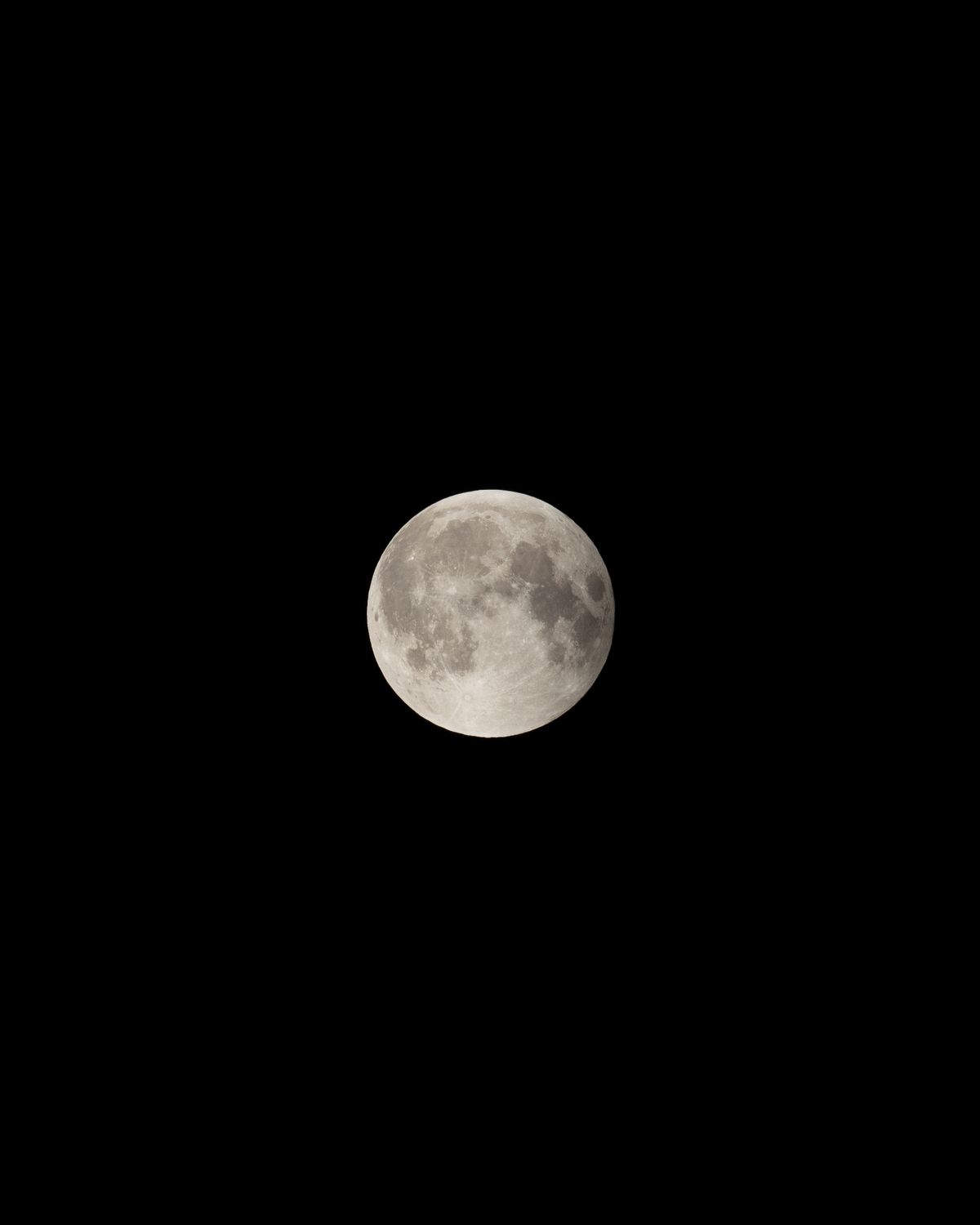
Quick Answer
The Moon is slowly moving away from Earth, about 3.8 centimeters, or 1.5 inches, a year. We know because scientists bounce laser beams off mirrors that Apollo astronauts left on the Moon and time how long the light takes to come back. The cause is the tides. The Moon’s gravity raises bulges in Earth’s oceans. Because Earth spins faster than the Moon orbits, those bulges get carried slightly ahead of the Moon, and their gravity tugs the Moon forward, nudging it into a wider orbit. At the same time, the tides act like a brake on Earth’s spin, so our days get longer, by about 1.7 milliseconds per century. Long ago the Moon was much closer and days were shorter: about 1.4 billion years ago, a day lasted just over 18 hours. As the Moon drifts farther, it will eventually look too small to fully cover the Sun, ending total solar eclipses in about 600 million years. But the Moon isn’t going to escape.
By the Numbers
Key Facts
- How fast
- About 3.8 cm (1.5 inches) a year
- How we know
- Lasers bounced off mirrors left by Apollo astronauts
- Why
- Tidal bulges on Earth tug the Moon forward in its orbit
- Side effect
- Earth’s days are slowly getting longer
How the tides push the Moon away
- The Moon raises tides
Its gravity pulls Earth’s oceans into bulges.
- Earth’s spin drags the bulge ahead
Earth rotates faster than the Moon orbits, so the bulge runs slightly ahead of the Moon.
- The bulge tugs the Moon forward
Its gravity gives the Moon a little extra speed, lifting it into a wider orbit.
- Earth slows down
The same tidal friction brakes Earth’s spin, making days slightly longer.
Lasers and mirrors
Apollo 11, 14 and 15 astronauts left reflector panels on the Moon, made of glass prisms that bounce light straight back. Observatories on Earth fire lasers at them and time the round trip. Decades of measurements show the Moon receding about 3.8 centimeters a year.
A slowly lengthening day
The tides that push the Moon away also slow Earth’s rotation, like a gentle brake. Today, the day grows about 1.7 milliseconds longer every century. A 2018 study found that about 1.4 billion years ago, when the Moon was closer, a day on Earth lasted just over 18 hours.
The end of total eclipses
Total solar eclipses happen because the Moon and Sun look nearly the same size in our sky. As the Moon drifts away, it will look slightly smaller, and in about 600 million years it will no longer be able to cover the whole Sun.
Myth vs. Fact
MythThe Moon will soon fly off into space.
FactIt’s moving away only about 1.5 inches a year, and scientists don’t expect it to escape Earth.
MythThe Moon has always been this far away.
FactIt was much closer long ago, and Earth’s days were shorter.
The Bottom Line
The Moon is drifting away because Earth’s tides tug it forward in its orbit, about 3.8 centimeters a year. The same tides are slowly making Earth’s days longer.