Why do bats hang upside down?
Because bats can’t easily take off from the ground. Hanging lets them drop straight into flight, and a special locking tendon in their feet keeps them hanging without using any muscle.
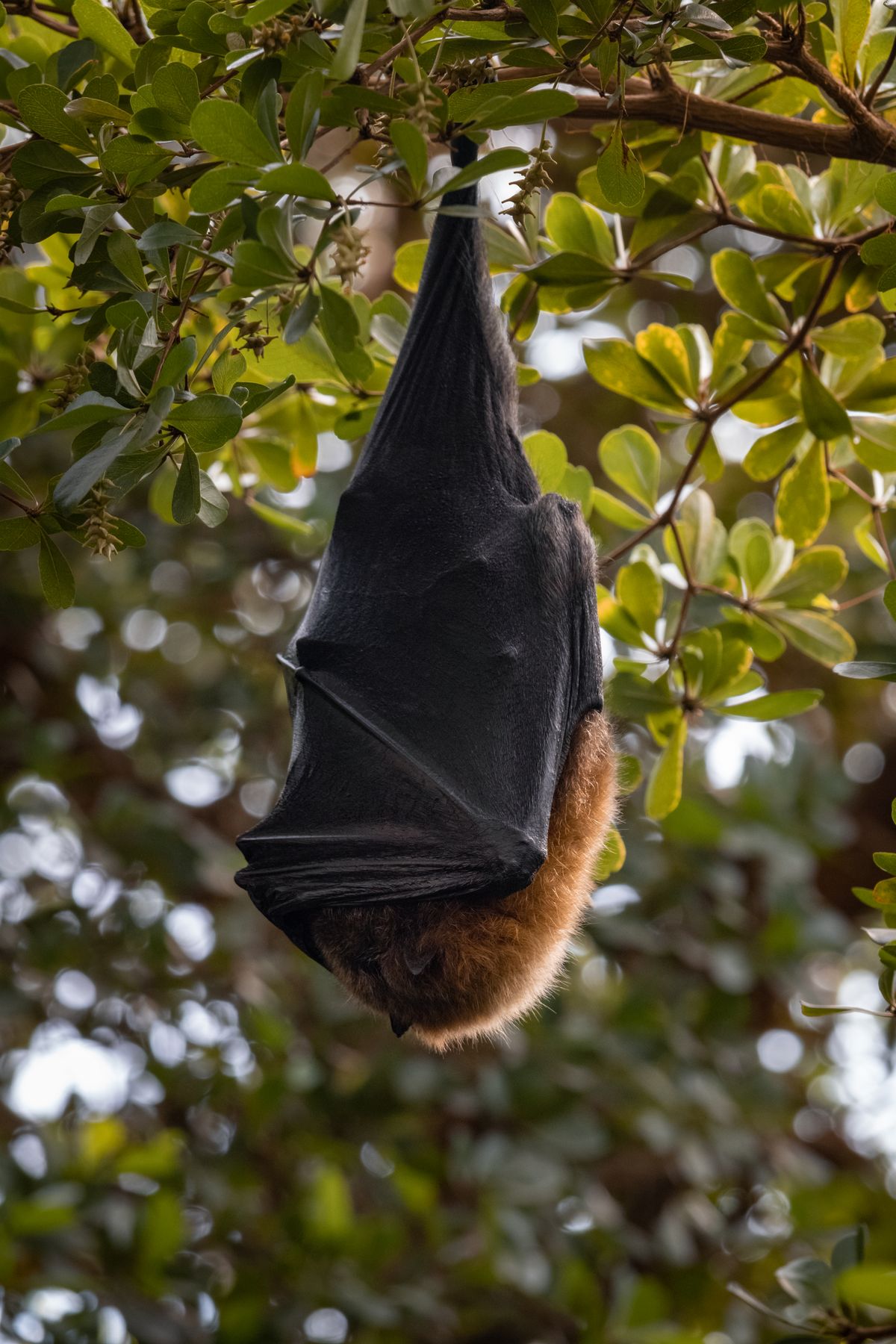
Quick Answer
Bats hang upside down mostly because of how they fly. Their wings can’t produce enough lift to launch from a standstill, and their hind legs are too small and weak to run or leap into the air the way birds do. So bats rest high up, hanging by their feet, and simply let go and drop into flight. Hanging doesn’t tire them out, either. Bats have a tendon-locking mechanism in their toes: the weight of the hanging body pulls the tendons tight, which closes the claws and locks them in place with no muscle effort. Bats use energy to let go, not to hang on, and bats that die while roosting have been found still hanging. Roosting upside down on cave ceilings and in trees also keeps bats out of reach of many predators. There are more than 1,400 species of bats, and Bat Week, October 24 to 31, celebrates them every year.
By the Numbers
Key Facts
- Main reason
- Bats can’t easily take off from the ground, so they drop into flight
- No effort needed
- A tendon-locking mechanism keeps their toes clamped shut
- Extra benefit
- High roosts keep bats away from many predators
- Bat species
- More than 1,400 worldwide
From hanging to flying
- Grip
The bat hooks its claws onto a ceiling, branch or crevice.
- Lock
Its body weight pulls the toe tendons tight, locking the claws in place.
- Rest
The lock holds on its own, so the bat can sleep without using muscle.
- Drop and fly
To leave, the bat lets go, falls and opens its wings in midair.
Built to drop, not to launch
Birds can run, jump or push off with strong legs to get airborne. Bats’ hind legs are small and light, built for hanging rather than walking, and their wings can’t generate enough lift from a standstill. Starting upside down and high up solves the problem: the bat just lets go.
A lock in the toes
Most bats have a tendon-locking mechanism in their feet. A 1993 study described how it works. Tiny bumps on each toe’s tendon catch on ridges in the surrounding sheath, like a ratchet. The bat’s own weight keeps the lock engaged, so hanging takes no muscle effort.
A safe place to sleep
Roosting on cave ceilings, under bridges or high in trees keeps bats away from many predators on the ground. In caves, clustering together near the ceiling can also help them share warmth.
Myth vs. Fact
MythBats have to hold on tight to hang all day.
FactA locking tendon holds their claws shut with no muscle effort. Letting go is the part that takes energy.
MythBats are just flying mice.
FactBats aren’t rodents. They’re their own group of mammals and the only ones that can truly fly.
The Bottom Line
Bats hang upside down because they can’t easily take off from the ground. Hanging lets them drop straight into flight, and a locking tendon holds them there without any effort.