What causes meteor showers?
Earth plowing through trails of dust left by comets. The bits hit our atmosphere at up to 45 miles a second and burn up 50 to 75 miles overhead as shooting stars. The Orionids peak around October 21.
Quick Answer
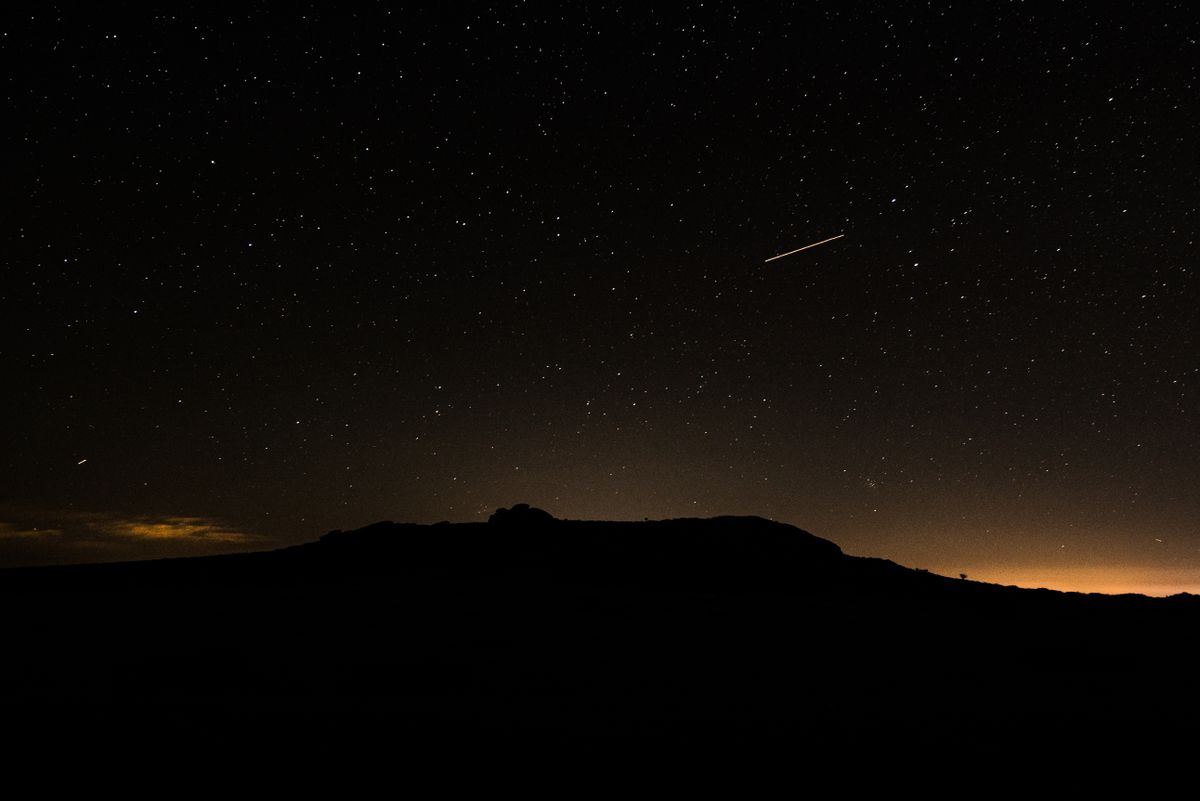
As comets swing around the Sun, they shed dust and bits of rock that spread out along their orbits. When Earth passes through one of these debris trails, which happens around the same dates every year, the pieces slam into our atmosphere at 7 to 45 miles per second. They burn up about 50 to 75 miles overhead, making the streaks we call shooting stars. Because the pieces travel on parallel paths, the meteors seem to come from one spot in the sky, and each shower is named for the constellation there. The Orionids, from Halley’s Comet, peak around October 21 with up to about 20 meteors an hour. The Leonids peak around November 17. The Geminids, which come from an asteroid called 3200 Phaethon, peak on December 13 and 14 and can produce up to 120 meteors an hour. To watch, find a dark spot away from city lights after midnight. You don’t need a telescope.
By the Numbers
Key Facts
- What causes them
- Earth passing through dust left by comets (and a few asteroids)
- Where they burn up
- About 50 to 75 miles overhead
- How fast they hit
- 7 to 45 miles per second
- Best viewing
- After midnight, somewhere dark, with no telescope needed
Upcoming meteor showers
| Shower | Peak (2026) | Source |
|---|---|---|
| Orionids | Around Oct. 21 | Halley’s Comet |
| Leonids | Around Nov. 17 | A comet’s debris trail |
| Geminids | Dec. 13–14 | Asteroid 3200 Phaethon |
Meteor rates depend on dark skies and the Moon. In 2026, only a thin crescent Moon is up on Geminid peak night.
Comet crumbs
Each time a comet passes near the Sun, it warms up and sheds dust and rock. Over many orbits, that debris spreads into a trail. Earth crosses the same trails at the same points in its orbit each year, which is why meteor showers return on schedule.
A fiery entrance
The pieces are moving so fast, 7 to 45 miles a second, that they heat up and vaporize high in the atmosphere, about 50 to 75 miles up. Orionid meteors are among the fastest, at about 41 miles a second, and they can leave glowing trails that last for seconds.
How to watch
Get away from city lights, lie back and give your eyes time to adjust to the dark. The best hours are usually from midnight to just before dawn. Binoculars and telescopes don’t help much, because meteors streak across wide stretches of sky.
Myth vs. Fact
MythShooting stars are falling stars.
FactThey’re tiny bits of comet or asteroid dust burning up in our atmosphere.
MythYou need a telescope to see a meteor shower.
FactYour eyes work best, since meteors can appear anywhere in the sky.
The Bottom Line
Meteor showers happen when Earth plows through dust left by comets, and the pieces burn up as shooting stars. The Orionids peak around October 21, and the Geminids on December 13 and 14.